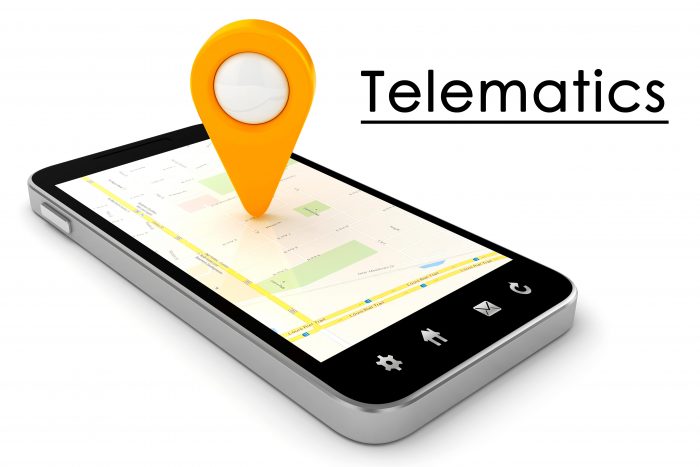
What is “telematics”?
Telematics uses your car’s GPS and onboard diagnostics to monitor and map out specific movements of your asset. Typically, it’s used in your car for your insurance company to monitor your activity and determine the risk of insuring you. It’s a little device that gets plugged into your OBD II. If you’ve ever had your car checked for error messages by a mechanic, the OBD II is the same port that connects the car code reader to your vehicle. The telematics device has a SIM card and a modem inside, which translates the data to your insurance company wirelessly.
There are also a form of telematics that is downloaded on your smartphone as an app, which serves the same purpose.
What kind of data does telematics collect?
Depending on what the insurance company has programmed the device to monitor, there is numerous things that your car’s computer records.
- Position of the car
- Speed
- Trip distance
- Trip time
- Idling
- Harsh braking
- Seatbelt
- Vehicle errors
- Battery voltage
- Fuel consumption
- Aggressive driving
- “Jack rabbit” starts
Why are telematics significant?
The use of telematics is growing. According to ResearchAndMarkets.com, the market is estimated to reach $56 Billion by 2022. Nine of the top ten insurers in the U.S. are using smartphone telematics to collect information. Telematics is spreading rapidly, and could soon come into your life as well.
Why have insurance companies started to use telematics?
The telematics collected regarding the overall safety of your driving habits helps insurance companies to rate your risk. For insurers, it’s a higher risk to insure someone who drives recklessly, because unsafe drivers are more likely to get into an accident that results in a costly claim. Using telematics gives them a real-time map with your driving patterns, and they are able to draw a conclusion about how you drive using the data. For example, if you slam on your brakes often, or speed, your insurance company is likely to raise your rates with fear that you will have an accident.
Don’t let the idea of a device tracking your driving scare you. There are actually plenty of benefits that come with using a telematics device in your car.
#1 You have the opportunity to lower your insurance rates. For most companies, they will monitor your driving and rate you accordingly. They may monitor you for 30 days, and if you drive safely, you could end up getting a discount on your insurance rates. You could save money, and ultimately save lives, by driving safely on the road.
#2 The device will make you more aware if you have dangerous driving habits. When an action becomes a habit, we do it so much we don’t recognize it can be an issue. i.e , not giving yourself enough room to brake before a red light. Once you realize your habits are putting your safety as risk, you may be more conscientious of your driving decisions. In general, telematics is designed to increase the safety of every driver who uses it, improving overall safety on the roads.
#3 It could even benefit the environment. Because telematics checks for harsh braking, analysts can conclude that the area has high traffic. As a result, your GPS may refresh and take you a quicker, alternate route to your destination. It will maintain engine performance, track and manage speed and aggressive driving, and improve your route choices. Reducing the amount of gas used, helps reduce carbon emission into the environment.
Typically, it may not be ideal for a device to track your car’s activity. However, driving is a very serious thing that can result in serious consequences if not done in a safe manner. A device that measures your safety is beneficial to the greater good.