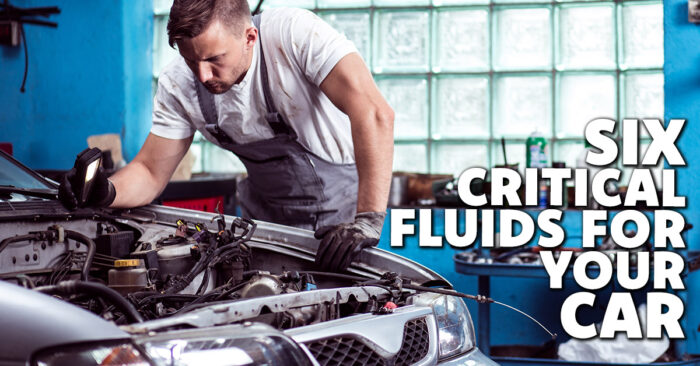
Six Critical Fluids for Your Car
We tend to view our cars as a combination of metal, plastics, cloth, leather, glass and rubber. We often forget the critical role fluids play in the operation of our vehicles. At any given time, our vehicles can easily have 20 or more gallons of liquid in them. Here is a closer look at those liquids, what they do and why they are critical.
Gas
Gas is, of course, what creates the energy for your car’s engine to run. The average gas tank in a car holds about 12 gallons; with vans, mini-vans and trucks having larger capacities. Gas is stored in the vehicle’s gas tanks and moves toward the engine through a pipe or flexible tubing known as the fuel line, propelled by the fuel pump. The fuel injector pushes the gas into the engine where it is ignited in a car engine’s cylinder.
Engine Oil
Generally, cars have an oil capacity of about four or five quarts that should be changed every three months or three to six thousand miles. Small pieces of metal and other debris are strained through an oil filter to keep the oil clean. Clean oil is one of the most underestimated ways in which to keep a car engine running efficiently and extending its lifespan.
Anti-Freeze/Engine Coolant
Today, antifreeze and engine coolant frequently comes premixed and can stay in a vehicle’s coolant system year around. Coolant is air cooled through the radiator and circulated through the engine through the water pump. Levels should be checked and systems should be flushed with the coolant changed annually. Coolant capacities for most radiators range from 10 to 28 quarts.
Transmission Fluid
Transmission fluid provides multiple benefits to a vehicle’s transmission, serving as a lubricant, hydraulic fluid, and a coolant, all designed to facilitate a smooth shifting transmission. Cars have a greater capacity of transmission fluid than most realize, carrying 12-16 quarts of the fluid.
Brake Fluid
Brake fluid is a chemical critical to the function of your cars hydraulic braking system. Foot pressure on your car’s brakes creates pressure in your brake lines, causing pads and shoes to apply pressure to the rotors. Without brake fluid, you would need to stop your car in Fred Flintstone fashion. Cars have a brake fluid capacity of about 1 quart.
Windshield Washer Fluid
If you don’t believe windshield washer fluid is critical, you may never have driven on snow covered or slushy streets. Those in the south can get away with water in the fluid containers, while an anti-freeze will need to be included in washer fluid in the north. This fluid is usually a blue color. Car’s have about a one gallon capacity of windshield washer fluid.
It can pay to be fluid about your auto insurance coverage. Compare rates annually and adjust your coverage accordingly. We can help. Contact one of our independent auto insurance today for a free review and price quote.