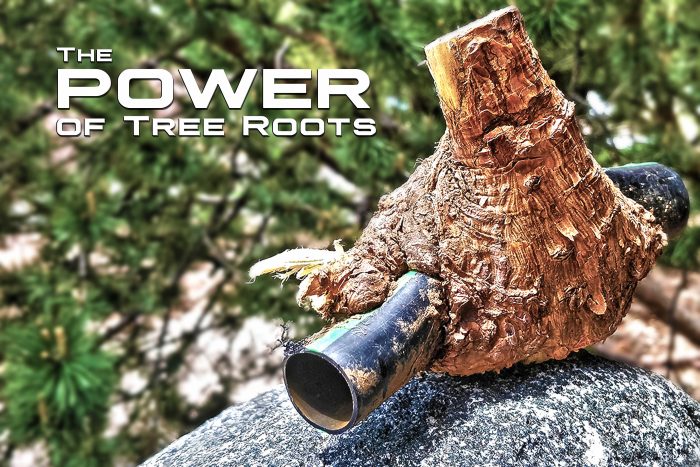
The Power of Tree Roots
The tallest tree in the world is a California Redwood, which stands 379 feet tall. That’s slightly taller than the length of a football field. To support these giant organisms, trees have an immaculate root system. Surprisingly, however, the roots of most trees remain in the top 18 inches of soil. However some root systems grow up to twenty feet into the soil. To grow into the massive organisms they are, trees must also consume plenty of water. According to Mother Nature Network, one mature oak can consume over 40,000 gallons of water annually.
Trees need water to:
- Cool the leaves
- Provide nutrients
- Exchange oxygen and carbon dioxide
In circumstances when water is scarce, roots will search for water nearby. Surprisingly, this is a threat to the water lines for your home.
How could the power of root systems affect your life? A property full of trees could create issues for your plumbing and other underground pipes on your property. Roots can sense water nearby by following moisture vapors which escape from cracks or holes in water lines. Tree roots are powerful enough to puncture the pipes to reach the water inside. Thin, string-like roots can continue to enter the existing holes, forming bundles of roots inside the pipe. Debris flowing from the home gets caught in the mound of roots in the pipes. As the pipes clog, you’ll notice slower water drainage. If the problem persists into a complete blockage, sewage water could back up into your home. It’s also possible that the pipe could collapse after too much pressure is built up.
The severity of the risk of root intrusion varies depending on the type of pipes.
- Steel: vulnerable to corrosion. Common on homes that are 25 years or older. These aged pipes have become porous over the years, at the end of their life cycle.
- Terracotta (Clay): Like steel pipes, clay pipes are common on homes that are 25+ years old. Over the years, the surface of the pipe has worn out and become permeable. Both steel and clay pipes are highly vulnerable to damage from tree roots.
- Concrete: vulnerable to root intrusion.
- PVC: Because PVC has fewer, tightly fitted joints, these pipes are less susceptible to root intrusion. Joints are where two pipes connect. Fewer joints means fewer points of entry for the roots to target.
What are some warning signs that there are tree roots growing in your pipes?
- If there are tree roots destroying your pipes, you may just smell rotten eggs around your house from the sewage.
- Sinks, toilets, and showers start to drain very slowly. Or, if you flush your toilet and hear a bubbling sound, something may not be right.
- A backed up toilet is a sign you may need to call a professional.
- If a sinkhole forms in your yard, do not go near it. Call a professional ASAP.
In the future, find out where the utility lines are before planting any trees to avoid the risk of severe water damage to your home.